
Structured Interviews with Claude: Questions and Scorecards
Claude for HR · Stage 3 Hire Structured Interviews with Claude: Questions and Scorecards By Jane……...
Claude for HR · Stage 3 Hire Structured Interviews with Claude: Questions and Scorecards By Jane……...
This content is available to DigitalAI Strategy Vault or Claude AI Masterclass members.
Claude for HR · Stage 2 Match Skills Matching with Claude: Build a Competency Matrix By……...
You must be a Claude AI Masterclass member to access this content.
A recap of the Level 2 intermediate training day — what participants practiced, where they got stuck, and what separates Level 2 skills from Level 1 basics.
You must be a Claude AI Masterclass member to access this content.
Most teams stall at Level 2. This maps the five levels of Claude adoption — and what separates teams who scale from teams who plateau.

We spent $62,000 on marketing in one quarter and honestly couldn’t tell you which channel earned it back. So we reconciled six messy data files — ad exports, bank statements, a CRM pull — into one table with Claude, using a method I now teach as GCPS. Turns out the channel eating half the budget was doing the least work. Here’s the exact prompts we used, so you can run it on your own numbers. #Data Analytcis #Marketing Data
Most prompts fail because they’re written for a person, not a model. The PRISM+ framework fixes that — prompts Claude actually understands, not just responds to.
This content is available to DigitalAI Strategy Vault or Claude AI Masterclass members.
Build a Business Knowledge Base Claude Actually Remembers Build a Business Knowledge Base Claude Actually Remembers……...
This content is available to DigitalAI Strategy Vault or Claude AI Masterclass members.

AI Strategy Why Most Business Owners Only Use 5% of Claude By Jane Chew AI Strategy…
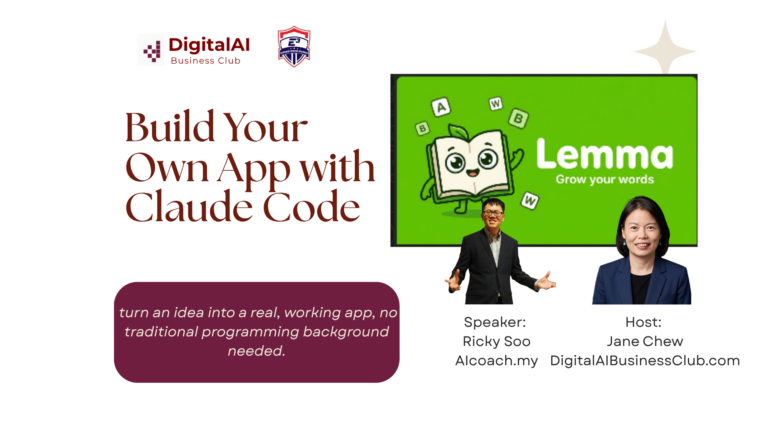
🚀 *Want to Build Your Own Business App with AI—Without Being a Programmer?* Join our hands-on…
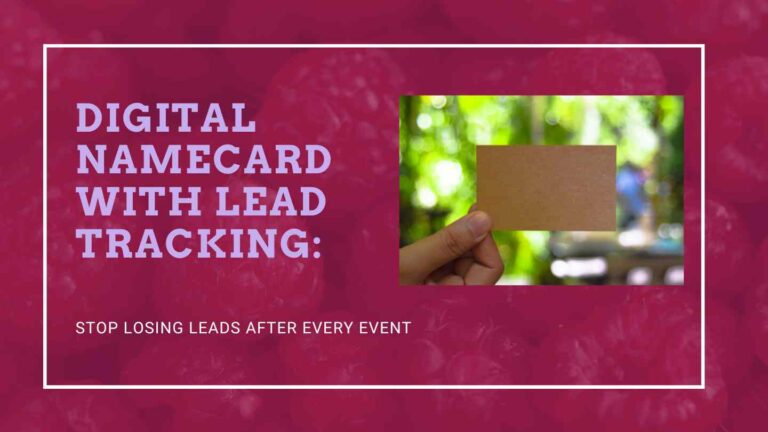
The problem: I couldn’t remember who I met
As an AI strategy consultant, I’m in networking spaces often — SME events, E3 Power Team sessions, bootcamp open days, speaking engagements. Every time, the same thing happens. Someone hands me a name card, or we just quickly scan each other’s WhatsApp. It feels efficient in the moment.
Then I get home. I open my phone, and there’s a new contact saved with just a name and number. No context. No memory of what we talked about, which event it was, or why I should follow up. Multiply that by every event I attend, and I was quietly losing dozens of good connections a month — not because I didn’t care, but because there was no system holding the memory for me.
The handshake was never the problem. It’s what happens — or doesn’t happen — in the days after, when the memory of who they are starts to fade.
What I built to fix it
So I created a digital namecard that does the remembering for me. Here’s how it actually works, in the order a person experiences it:
They scan my QR code. It saves my contact directly to their phone — no typing, no mistakes.
They can come back to the same page afterward and leave a few details for me — their name, company, and a note on how we met — so I can remember and follow up properly.
Or, they can WhatsApp me straight from the card. This is the part I’m most happy with. One tap opens a chat with me, already saying who they are and where we met. That message becomes a record in both of our phones, instantly. No waiting, no forgetting.
On my end, I have a private back-end I can log into, where I see everyone who filled up the lead form — their details, when they connected, and from which event. I can mark them as followed up, add notes, and keep track properly instead of relying on memory.
The process now feels almost seamless. Someone I meet at an event can save my contact, message me instantly on WhatsApp, or leave their details if they’d like me to reach out — and either way, there’s a record somewhere instead of nothing.
This content is available to DigitalAI Strategy Vault or Claude AI Masterclass members.