
AI Jobs in Malaysia and ASEAN: Where the Real Opportunities Are
In this article: what AI is really changing in the Malaysian and ASEAN job market, where the opportunities are (including for students outside computer science), and a practical plan you can start this semester.
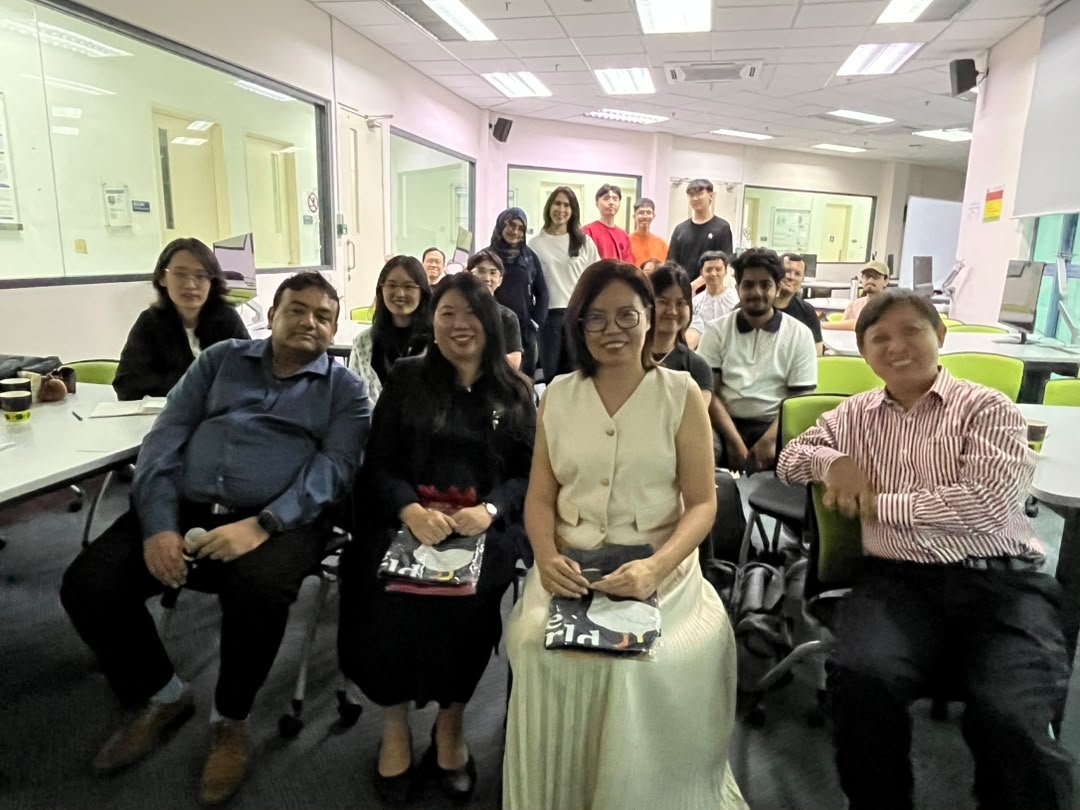
This article grew out of my fireside chat on “Opportunities? AI, Jobs & the Future of Work in ASEAN” at the University of Nottingham Malaysia in October 2026. It follows the same two rounds: what is changing, and what to do about it.
Quick answer
AI is replacing tasks inside jobs faster than it is replacing whole jobs. Routine work done alone is most exposed. Work that is social, creative and judgement-heavy grows in value. Malaysia aims to create around 300,000 AI-attributable jobs by 2030, and many of them will go to people who apply AI, not only people who build it. Students in any field can prepare now by using AI for routine tasks, building human skills deliberately, and showing real projects in public.
At every campus talk, someone asks a version of the same question: “Is AI going to take the job I’m studying for?”
It’s a fair question. Graduates are sending more applications and hearing back less. Headlines swing between “job apocalypse” and “300,000 new AI jobs”. Neither helps a final-year student decide what to do on Monday.
I came to AI after more than 30 years in corporate CRM, loyalty and data-driven marketing, not from computer science. What I’ve learned is that the useful question is not whether AI will change your job. It’s which parts it will change, and what you’ll do with the rest.
Round 1: What is changing
Andrew Ng, co-founder of Google Brain and Coursera, points to economists who broke jobs down into individual tasks. Their finding: AI could do around 30–40% of the tasks in many jobs. Ng’s conclusion is the opposite of the panic headlines. When AI makes part of a job cheaper, the human part becomes worth more.
That shift is already visible at entry level. The tasks that used to train juniors are the ones moving to AI first:
- Formatting reports and first-draft writing
- Basic research and summarising
- Data entry and data cleaning
- Scripted customer replies
So the junior role as it used to be defined is shrinking. Employers still hire juniors. They now look for juniors who can do the thinking around those tasks: check the output, ask the right question, and explain what it means for the business.
Don’t ask “Will AI take my job?” Ask “Which parts of my job will AI take, and what will I do with the time?”
Where AI is creating real business value in ASEAN today
In my work with SMEs and corporate teams across Malaysia and ASEAN, AI creates real value in four places:
- Customer-facing work. Faster replies, personalised follow-ups and marketing content in several languages.
- Sales and revenue. Lead follow-up, proposals and spotting which customers are about to leave.
- Operations and reporting. Summarising documents, preparing reports and turning raw data into dashboards.
- Decision support. Analysing customer and sales data so managers decide with evidence, not guesswork.
The pattern is consistent. Value appears when a business starts with a clear problem and then picks the tool. It stalls when a company buys tools first and hopes for results. Strategy before tools.
That shapes who gets hired. Companies are looking for people who can understand the business problem, use AI to get the work done, check and explain the output, and work well with customers and colleagues. In other words: translators between business and AI.
Which work is most exposed? Kai-Fu Lee’s matrix
Dr Kai-Fu Lee, former head of Google China and one of Asia’s best-known AI investors, offered a simple way to judge risk in his 2018 book AI Superpowers. He didn’t sort jobs by industry or salary. He asked two questions:
- Is the work routine or creative? Does it follow patterns and rules, or does it need creativity and strategy?
- Is the work solo or social? Can it be done alone, or does it depend on trust, empathy and relationships?
Notice that the Danger Zone isn’t only low-skill work. Loan officers and radiologists are well paid. What puts work at risk is not how hard it is, but whether it is routine and done alone.
The 2026 update
Lee’s matrix came out before ChatGPT and Claude. Two things have changed since:
- The Slow Creep is no longer slow. Generative AI now writes, designs and drafts. Solo creative tasks such as basic copywriting and report writing are moving faster than expected.
- The Safe Zone is where AI helps most. A CEO or social worker won’t be replaced, but one who uses AI well will outperform one who doesn’t.
Put the two ideas together. Lee’s matrix tells you which 30–40% of a job AI will take: the routine, solo tasks. Your career strategy is to win the other 60%: the social, creative and judgement-heavy work. Move your career up and to the right.
Malaysia’s AI Nation 2030 in plain terms
Malaysia’s National AI Action Plan 2026–2030, known as AI Nation 2030, gives this conversation a local backdrop. The headline targets:
- Around 300,000 AI-attributable jobs by 2030. Ministers have described the target as 300,000 to 500,000 jobs. No breakdown by occupation has been published yet.
- An additional 1.2 percentage points of GDP growth from AI, and a place among the top 10 countries in the Global AI Index.
- 700,000 workers targeted for reskilling under the Malaysia Digital 2030 Action Plan.
- AI Untuk Rakyat, free AI education targeting 100,000 Malaysians aged 18 to 30 through 2027, rolling out in phases from 31 August 2026.
The plan’s biggest challenge is talent. If Malaysia can’t produce enough people who can use and build AI, the country risks importing AI rather than shaping it. That is exactly why young Malaysians are in a strong position.
The jobs target is a national ambition, not a guarantee. The opportunity is real, but it goes to people who prepare now.
Where the opportunities are: the 4 Doors
Most AI careers won’t be in building AI. They’ll be in applying it, explaining it and making sure it’s used responsibly. I describe four doors into the AI economy. Only one requires a computer science background.
| Door | What they do | Who fits | Example roles |
|---|---|---|---|
| 1. Builders | Build AI models and systems | CS, engineering, maths | ML engineer, AI developer, data engineer |
| 2. Bridgers | Translate business needs into AI solutions | Business, marketing, finance, economics | AI business analyst, AI product manager, AI implementation consultant |
| 3. Guardians | Keep AI safe, fair, legal and accurate | Law, psychology, social sciences, philosophy | AI governance, data privacy, AI risk and compliance, AI output evaluator |
| 4. Amplifiers | Use AI to multiply results in their own field | Any degree | AI-enabled marketer, HR analytics, AI educator, health data coordinator |
Bridgers and Guardians sit in Lee’s Safe Zone: their work is social, strategic and accountable. Amplifiers use AI to clear out their Danger Zone tasks so they spend more time in the Safe Zone. That’s why many of the best AI-era careers are open to students outside computer science.
The entrepreneurship door
The barrier to starting a business has never been lower. One person with AI can now handle marketing, admin and customer service that used to need a small team. ASEAN is a large, diverse market, and young people here understand local languages, culture and customers better than any global platform. Many SMEs want to use AI but don’t know where to start. Young people who can turn AI into results for those businesses are valuable, whether as employees, freelancers or founders.
Want help with your first AI project? Join the free DigitalAI community on WhatsApp for practical AI tips, prompts and session invites.
Join the free WhatsApp community →AI and data careers beyond computer science
Keep your field and add AI to it. “Marketing + AI” beats starting from zero somewhere new. Here’s how that looks by background:
| Your background | AI-era pathways | Your advantage |
|---|---|---|
| Business / Management | AI business analyst, AI project or product manager, operations improvement | You know how companies make money and where it leaks |
| Marketing / Communications | Customer data analyst, AI content strategist, CRM and personalisation | You understand customers, not just data |
| Finance / Accounting | Financial data analyst, fraud and risk analytics, AI-assisted forecasting | You know which numbers matter |
| Law | AI governance, data protection, AI compliance review | Every company using AI needs people who understand the rules |
| Psychology / Social Sciences | AI ethics and bias review, user research, behavioural analysis | AI needs people who understand people |
| Education | AI trainer, learning designer, AI literacy coach | Reskilling 700,000 workers needs people who can teach |
| Languages / Arts / Design | Local-language AI content, AI output review, AI-assisted design | ASEAN’s language diversity is hard for global tools to match |
| Healthcare / Sciences | Health data coordinator, clinical AI support, research data analysis | Domain knowledge to spot when AI is wrong |
My own path is an example. My corporate career was built on customer data: predicting behaviour and personalising offers. That’s the foundation of much of today’s AI. When AI tools arrived, my business and customer knowledge became more valuable, not less. The tools were new. The judgement wasn’t.
Round 2: What to do now
Advice is only useful if you can act on it this week. Here are four moves.
Starting from zero? Three moves in 90 days
Many students tell me they have no AI qualification, little experience and no professional network. Each gap has a practical fix.
- Days 1–30: Practise on real work. Use one AI assistant every day on a real business task: a society budget, a marketing plan for an event, a report from your part-time job. Rebuild one process with AI and check every output yourself. This replaces the qualification you don’t have with skill you can demonstrate.
- Days 31–60: Solve a real problem for a real business. Offer to help a small business for free: a family shop, a campus vendor, a friend’s startup. Use AI to fix one thing for them, such as replying to customers faster, writing product descriptions or tidying their sales records. Ask them for a short testimonial. Now you have experience.
- Days 61–90: Make your work visible. Write two or three LinkedIn posts on the problem, what you did with AI and what you learned. Connect with 30 people in the field you want to enter and comment thoughtfully on their posts. Now people know your name before they see your CV.
Qualifications get filtered. Proof gets noticed.
The four moves below help you keep growing after those 90 days.
1. Build three layers of skill
- AI fluency. Use one AI assistant (Claude, ChatGPT or Gemini) every day on real coursework or part-time work. Depth with one tool beats a shallow tour of ten.
- Domain depth. Know one industry or function well. AI is most useful in the hands of someone who knows what good looks like.
- Human skills. Problem framing, communication, trust-building and judgement. These grow in value as AI spreads.
2. Hand AI the routine, keep the thinking
Treat AI output as a first draft. Editing still makes you think; copying doesn’t. The risk isn’t that AI is wrong. It’s that you stop being able to answer the hard follow-up question in the meeting.
3. Plot your tasks on the matrix
- List 10 tasks you expect to do in your first job.
- Place each one in a box of Lee’s matrix.
- Danger Zone tasks: learn to hand them to AI now. That’s your speed advantage.
- Safe Zone tasks: practise them deliberately. Presenting, negotiating, leading a team, handling a difficult customer. Campus life is free practice.
4. Prove it in public
A certificate opens the conversation. A portfolio closes it. Rebuild one real process with AI, then write about what you changed and learned. Hiring managers want to hear: “I’m not sure, but here’s how I tested it, and here’s what I tried first.”
If you want to start a business
- Pick a problem you understand personally.
- Talk to 10 people who have it.
- Use AI to build a simple offer, landing page and content in a week.
- Get five paying customers before you polish anything.
Three risks to avoid: outsourcing your thinking to AI, trusting outputs without checking facts and numbers, and pasting confidential company or customer data into public tools.
Your 30-day plan
| Week | Do this | Done when |
|---|---|---|
| Week 1 | Pick one process from your studies, society or part-time job. Map its steps. | You have a written list of every step. |
| Week 2 | Rebuild it with an AI assistant. Edit every output yourself. | The new version saves time and you can explain each step. |
| Week 3 | Present the result to a lecturer, team or manager and ask for feedback. | You’ve had one honest feedback conversation. |
| Week 4 | Write a LinkedIn post: the problem, what you built, what you learned. | The post is live and you can talk about it in an interview. |
Prompt: Find your AI door and a first project
Act as a career coach for a university student in Malaysia.

Context: I study [YOUR COURSE]. Outside class I [YOUR SOCIETY / PART-TIME JOB / PROJECT].

Task: Ask me 5 questions, one at a time, about what I enjoy and what I'm good at. Then tell me which of these 4 doors into the AI economy fits me best: Builder, Bridger, Guardian or Amplifier.

Structure: Explain why that door fits, name 3 roles in that door, and suggest one process I could rebuild with AI in 2 weeks to show I'm ready for it.

Goal: A first project I can talk about in a job interview.
Prompt: Plot your future tasks on the matrix
Act as a career strategist.

I want to work as a [TARGET ROLE] in [INDUSTRY] in Malaysia.

List 10 tasks this role does in a typical week. Place each task in one of four boxes: routine + solo, routine + social, creative + solo, creative + social.

For each routine + solo task, tell me how AI could do it and what I must still check. For each creative + social task, suggest one way I can practise it while still a student.
Frequently asked questions
Will AI take graduate jobs in Malaysia?
AI will take over some tasks inside graduate jobs first, mostly routine drafting, summarising, data entry and first-draft research. Graduates who use AI for those tasks and build the judgement, communication and domain skills around them will be the ones hired.
Do I need a computer science degree to work in AI?
No. Building AI models needs technical skills, but most AI-era roles involve applying AI, explaining it to businesses, or making sure it is used responsibly. Business, marketing, law, psychology, education and design graduates can enter through these paths.
Which jobs are least likely to be replaced by AI?
Kai-Fu Lee’s Risk of Replacement matrix suggests jobs that are both highly social and based on creativity or strategy are the hardest to replace. Jobs that are routine and done alone face the highest risk. In practice, every job contains tasks in both groups.
How many AI jobs is Malaysia aiming to create?
Malaysia’s National AI Action Plan 2026–2030, also called AI Nation 2030, aims to create around 300,000 AI-attributable jobs by 2030. Government ministers have described the target as 300,000 to 500,000 jobs. A breakdown by occupation has not been published.
What is the first step to prepare for an AI career?
Pick one task you do every week, rebuild it with an AI assistant, check every output yourself, and share what you learned on LinkedIn. One real project that shows how you think is worth more than a list of courses.
How can a student show skills without a job?
Help a small business, society or NGO solve one real problem using AI, write up what you did and what changed, and ask the person you helped for a short comment. A documented real result is credible evidence even without a formal job.
What should students never trust AI to do without checking?
Never trust AI-generated facts, numbers or sources without checking them, especially in work that carries your name. AI can produce confident, well-written answers that are wrong, including references that do not exist.
Start with one real project
Join the free DigitalAI community for practical AI prompts, playbooks and session invites. Follow me on LinkedIn for weekly AI strategy you can act on.
Join the free community Follow Jane Chew on LinkedInJane Chew / AI Strategy Coach, HRDC Corporate Trainer / Founder of digitalaibusinessclub.com