
Kimi K3 and the Real AI Strategy Question for SMEs
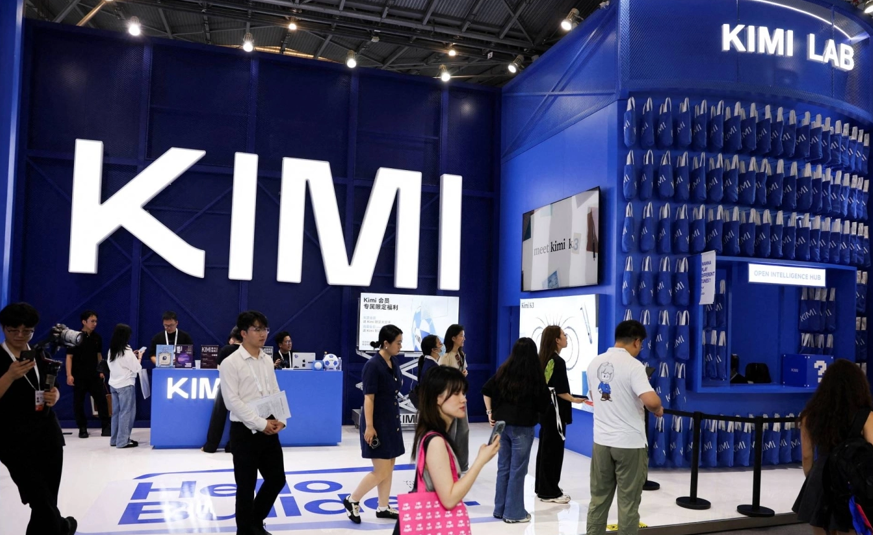
A Chinese startup most SME owners had never heard of just made frontier-level AI dramatically cheaper — and wiped billions off two of its own rivals’ share prices in a single day. The headline is China versus America. The story that actually matters for your business is what happens to your AI budget, and your strategy, when the smartest available models keep getting cheaper every few weeks.
Best Answer
Kimi K3, released in July 2026 by Chinese startup Moonshot AI, is the largest open-weight AI model made publicly available — free for any developer to download and build on, and priced at a fraction of the cost of top closed models. For SME owners, the real takeaway is not which model is “best.” It is that frontier-level AI capability is turning into a commodity, which means your advantage should come from knowing where AI belongs in your customer journey — not from which AI vendor you happen to be using.
What Actually Happened With Kimi K3
Moonshot AI, a Beijing startup backed by Alibaba and Tencent, released Kimi K3 in mid-July 2026. At 2.8 trillion parameters, it is the largest open-weight AI model made publicly available — meaning any business or developer will be able to download, run, and customise it once the full model ships later this month, unlike the closed models sold by Anthropic or OpenAI.
Within a day, independent testers ranked it first in the world at a specific practical task: building working web interfaces. It placed among the strongest models available anywhere on several other independent benchmarks, sitting close behind — not ahead of — the very best paid models from the leading US labs.
The market noticed immediately. Shares in two of Moonshot’s Chinese rivals fell sharply the same day, and US tech stocks dipped too. This is now the third time in about a month that a Chinese AI lab has closed the gap with the leading US labs, after most of the industry had assumed that gap was measured in years, not weeks.
Why Falling AI Costs Change the Conversation
Here is the detail that matters more than any leaderboard ranking: Kimi K3 is priced at a fraction of the cost of top-tier closed models, with usage discounts that cut the effective cost further for repeated, similar tasks. That is the pattern worth noticing. The price of frontier-level AI capability is dropping in a matter of weeks, not years.
To be clear, no SME is going to run a 2.8 trillion-parameter model themselves — that requires computing infrastructure well beyond what any small or medium business owns or needs. What matters instead is the competitive pressure this puts on every AI-powered tool you already pay for: the CRM add-on, the marketing writer, the customer service assistant, the WhatsApp follow-up automation. As frontier intelligence gets cheaper for the labs, that pressure tends to flow down into the tools built on top of it, either through lower prices or better capability at the same price.
Picture a small training or consulting business in Malaysia that pays monthly for an AI writing tool to draft proposals and follow-up messages. That owner does not need to track Kimi K3, Anthropic, or OpenAI by name. What they do need to check is whether the tool they are paying for is quietly getting more capable each quarter, and whether they are actually using that added capability or still working the way they did a year ago.
That reframes two conversations for any business owner watching AI headlines. The budget conversation shifts: “can we afford AI” becomes a smaller question than “are we already paying for capability we are not using yet.” And the vendor conversation shifts too: building your entire workflow around one AI tool or provider is riskier than it looks, when a cheaper, comparable option can appear within a month.
Know Where Your Business Actually Needs AI — Before You Chase the Next Model Release
Most business owners react to AI headlines before they’ve mapped where their own customer journey is leaking revenue, attention, or trust. Fix the order, and every tool decision after that gets easier.
Take the Free DigitalAI Readiness AssessmentThe Caution Most Headlines Skip
None of this makes Kimi K3, or any single model, a safe default choice — and the coverage around its launch was honest about that. AI researcher Ethan Mollick tested it on a detailed statistical audit and found real errors that a careful review caught. Moonshot AI itself acknowledged the model still has a rougher user experience than the two leading closed models. Some commentators also flagged that models like this can be tuned to score well on public benchmark tests without being reliably good at open-ended, judgment-heavy work.
None of that is a reason to dismiss the story. It is a reason to keep the story in its place. Cheaper, more available AI is a genuine shift worth paying attention to. It is not a substitute for human judgment on anything with real business risk attached — contracts, financial decisions, compliance, or claims made directly to customers.
What To Do This Week
You do not need to evaluate Kimi K3, or any specific model, to act on this. You need a sharper question than “which AI tool should I use.”
- Name one task in your business you have been putting off “until AI gets good enough.” Check whether that is still true, or whether it quietly stopped being true a few months ago.
- Before adding a new tool, check whether the hesitation is really about capability, or about not yet knowing where AI should sit in your customer journey.
- If you cannot answer that second question clearly, that is your actual starting point — not the next model release.
Prompt: Where Should AI Sit in My Customer Journey
Problem: I keep reacting to AI news instead of deciding where AI actually belongs in my business.
Role: Act as my AI strategy advisor.
Instruction: Walk me through my customer journey stage by stage (lead, first response, onboarding, delivery, retention) and ask me where each stage is currently losing time, trust, or revenue.
Structure: For each stage, give me a short verdict — "AI-ready now," "needs process fix first," or "not a priority yet" — with one sentence of reasoning.
Milestone: End with the single stage I should address first, and why.
Use this before evaluating any new AI tool or model. It forces the diagnosis to come before the tool decision, which is the order that actually protects your budget.
Turn AI Headlines Into a Clear Strategy, Not a New Distraction
DigitalAI Strategy Vault Membership gives you the frameworks, prompts, and monthly guidance to decide where AI belongs in your business — so the next model release is background noise, not a decision you have to make from scratch.
Join DigitalAI Strategy Vault MembershipFrequently Asked Questions
What is Kimi K3 and why is it in the news?
Kimi K3 is a large AI model released in July 2026 by Moonshot AI, a Beijing-based startup backed by Alibaba and Tencent. At 2.8 trillion parameters, it is the largest open-weight AI model made publicly available, meaning any business or developer can download, run, and customise it once the full release ships. It made news because independent testers ranked it first in the world for building web interfaces within a day of launch, and its release wiped billions off the share prices of rival Chinese AI firms.
Should my SME switch to Kimi K3 or another cheaper AI model?
Almost certainly not directly. Kimi K3 is a 2.8 trillion-parameter model that requires enterprise-grade computing infrastructure to run, which is out of reach for any small or medium business to self-host. What matters for SME owners is not switching models yourself, but recognising that the AI tools you already pay for will keep getting cheaper and more capable as competition like this increases.
How does falling AI cost actually affect a small business?
As frontier-level AI becomes cheaper to access, the software and apps SME owners already use for marketing, customer service, and operations tend to get more capable at the same price, or the same capability at a lower price. This shifts the real question from “can we afford AI” to “are we actually using the affordable AI capability that already exists in our current tools.”
Is open-source AI like Kimi K3 reliable enough for business use?
Independent reviewers found real gaps. AI researcher Ethan Mollick documented errors when Kimi K3 was tested on a detailed analytical task, and Moonshot AI itself acknowledged the model has a rougher user experience than the leading closed models. Cheaper and more available does not automatically mean more reliable, which is why human review still matters most on anything with real business risk attached.
What should I do before adopting any new AI model or tool?
Diagnose where your customer journey is actually leaking revenue, attention, or trust before evaluating any specific AI tool or model. Once you know where AI should sit in your business, choosing between tools becomes a much smaller decision than most business owners assume.