
AI for Sales Management: How Sales Leaders Can Use AI to Improve Decisions, Coaching, and Pipeline Visibility
AI in sales is not just about writing emails faster. For sales leaders and managers, the bigger opportunity is using AI to improve visibility, strengthen coaching, sharpen decisions, and create more consistent sales execution.
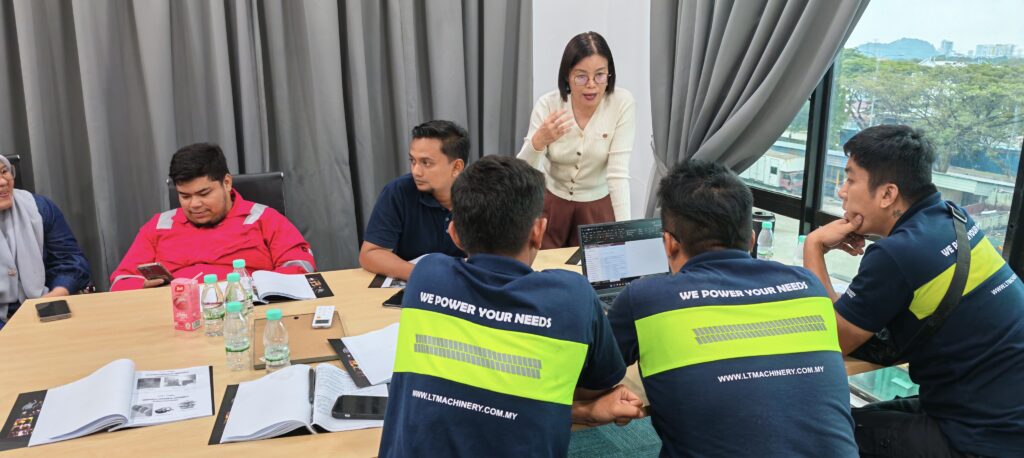
I recently concluded an AI for Sales Management workshop, and one message stood out clearly: many teams are interested in AI, but what they really need is not more tools. They need clearer business application.
When used well, AI can help sales teams prepare faster, summarise customer conversations, improve follow-up quality, identify patterns in objections, and support better pipeline reviews. The value is not in using AI for the sake of it. The value is in using AI to improve how sales teams think, act, and execute.
Table of Contents
- Why AI Matters in Sales Management
- How AI Can Be Used in Sales Management
- What Good AI Use in Sales Looks Like
- Common Mistakes Teams Make
- Where Sales Teams Should Start
- HRDC Courses and AI Transformation Program
- Frequently Asked Questions
Why AI Matters in Sales Management
Sales managers today are expected to do more than track numbers. They need to guide teams, improve forecasting, coach performance, and respond to changing customer behaviour. That is where AI can become useful.
Not by replacing people. Not by removing judgment. But by helping teams work with better structure, faster insight, and greater consistency.
For example, many managers spend too much time reviewing notes, chasing updates, and trying to understand why deals are slowing down. AI can reduce that friction by helping turn day-to-day activity into usable management insight.
How AI Can Be Used in Sales Management
Here are some practical ways AI can support sales management:
1. Faster meeting preparation
AI can help teams prepare for customer meetings by organising account background, surfacing likely discussion points, and drafting smart questions before the call.
2. Call and meeting summaries
After a customer conversation, AI can summarise key discussion points, extract action items, and highlight follow-up priorities, helping salespeople and managers stay aligned.
3. Better follow-up communication
AI can support the drafting of recap emails, next-step messages, proposal outlines, and internal updates so sales teams can respond faster and more consistently.
4. Lead qualification support
AI can help teams compare opportunities, identify missing information, and assess which leads deserve attention based on fit, urgency, and buying signals.
5. Objection and customer pattern analysis
Over time, AI can help identify repeated objections, common questions, and recurring concerns across customer conversations. This supports better messaging, stronger coaching, and offer refinement.
6. Pipeline review support
Sales managers can use AI to review pipeline notes, identify stalled deals, and improve the quality of forecast and review conversations. This creates a more evidence-based coaching approach.
7. Coaching and team development
AI can support managers in reviewing sales interactions, spotting communication gaps, and guiding reps more systematically instead of relying only on memory or instinct.
What Good AI Use in Sales Looks Like
The best use of AI in sales is not random prompting. It is structured, practical, and tied to business outcomes.
Good AI use in sales should help a team:
- improve the quality of customer follow-up
- move faster without losing judgment
- increase consistency across the team
- support stronger sales coaching
- improve visibility across deals and actions
- reduce admin burden so teams can focus on customer conversations
In short, AI should strengthen sales discipline, not add more noise.
Common Mistakes Teams Make
Many businesses rush into AI by focusing too much on tools and not enough on workflow. That usually leads to shallow adoption and weak results.
Some common mistakes include:
- using AI only for content generation but not for management visibility
- expecting AI to replace sales thinking
- failing to define where AI fits in the sales workflow
- adopting tools without practical manager training
- not linking AI use to commercial outcomes, coaching quality, or pipeline health
The better starting question is this: What sales problem are we trying to solve?
Where Sales Teams Should Start
If you are a business owner, sales leader, or commercial manager, here is a practical starting point:
- Map the current sales workflow
- Identify repetitive, delayed, or inconsistent tasks
- Select 2 to 3 high-value AI use cases
- Train the team on structured, responsible use
- Review outcomes based on quality, speed, visibility, and adoption
This helps teams use AI with focus, rather than turning it into another disconnected experiment.
Looking for HRDC-Claimable AI Training or an AI Transformation Program?
If your organisation is exploring practical, non-technical, strategy-led AI training for sales teams, managers, or leaders, I offer HRDC-claimable courses and AI transformation programs designed to move teams from AI confusion to useful implementation.
These programs are suitable for SMEs, leadership teams, customer-facing departments, and organisations that want to improve productivity, decision-making, sales execution, and business readiness with AI.
Contact Jane Chew to discuss a customised program for your organisation.
Visit DigitalAIBusinessClub.com
Take the DigitalAI Readiness Assessment
Connect with Jane Chew on LinkedIn
Call / WhatsApp: 012-666 9892
Frequently Asked Questions
What is AI for sales management?
AI for sales management refers to using AI tools and workflows to help sales leaders improve planning, coaching, follow-up, analysis, forecasting, and team productivity. The aim is not just automation, but better sales decision-making and execution.
How can AI help sales managers?
AI can help sales managers summarise calls, identify follow-up actions, review pipeline patterns, analyse objections, support team coaching, and improve consistency across the sales process.
Will AI replace salespeople?
No. AI should support sales teams, not replace human relationship-building, judgment, and commercial thinking. Its strongest role is reducing admin work and improving decision quality so teams can focus on higher-value conversations.
Can SMEs use AI in sales management?
Yes. SMEs can benefit quickly from AI because they often need better visibility, faster execution, and more efficient use of limited resources. The key is to start with clear use cases and practical training.
Do you offer HRDC-claimable AI courses for companies?
Yes. I provide HRDC-claimable AI training and AI transformation programs for organisations that want practical, business-focused AI adoption across sales, leadership, and customer-facing functions.
Final Thought
AI is not the strategy.
But when it is aligned to the right sales process, team priorities, and management discipline, it becomes a strong enabler of better execution, stronger coaching, and better commercial results.
That is how sales leaders should think about AI: not as hype, but as a practical management advantage.
Related Reads
Tags: AI for sales, sales management, AI training Malaysia, HRDC AI course, AI transformation program, sales leadership, SME AI adoption, commercial productivity