From Hype to Know-How: What SMEs Must Get Right Before Implementing AI — Reflections from BBX Connect Day 2.0
By Jane Chew | AI Strategy Coach | Founder, DigitalAI Business Club
AI is no longer a future topic for SMEs. It is already shaping how businesses think, respond, market, serve, and operate. But one truth became very clear during the panel discussion at BBX Connect Day 2.0: successful AI adoption is not about chasing more tools. It is about gaining more clarity.
Best Answer
What is the right way for SMEs to implement AI?
SMEs should not begin with tool shopping. They should begin with business clarity.
The first step is to identify where the business is losing time, consistency, quality, customer responsiveness, or revenue.
From there, leaders can prioritise one or two practical workflows, apply AI in a controlled way, and build internal capability step by step.
The businesses that win with AI will not be the ones using the most tools. They will be the ones using AI with the most clarity.
Why This Panel Mattered
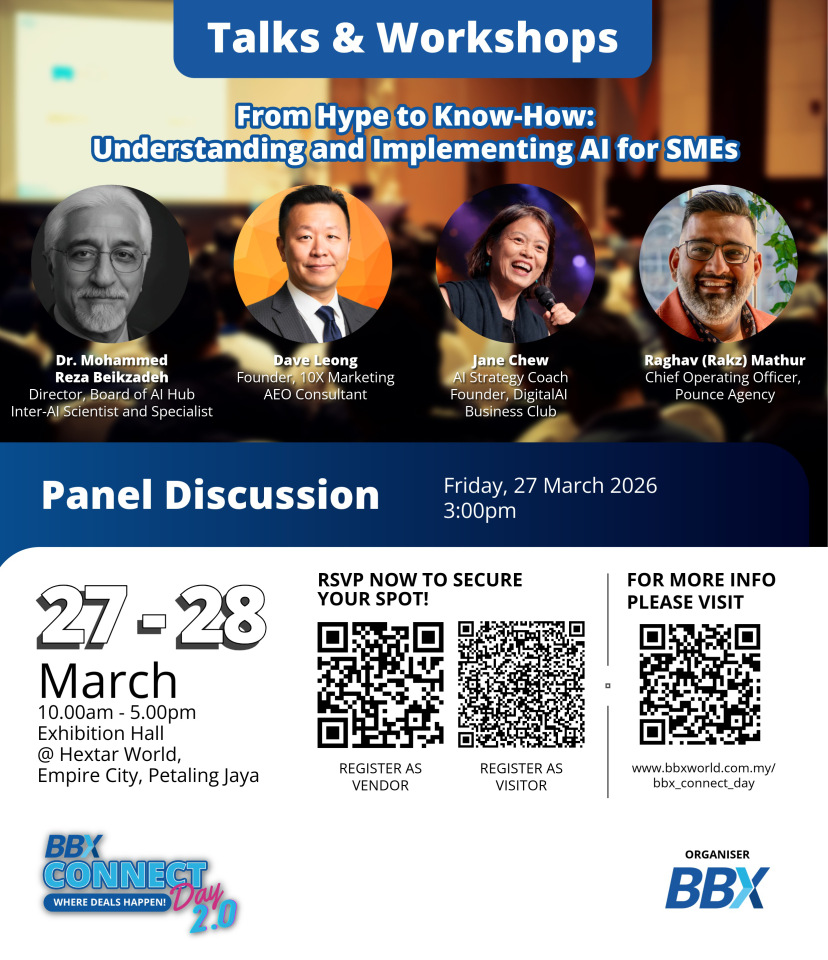
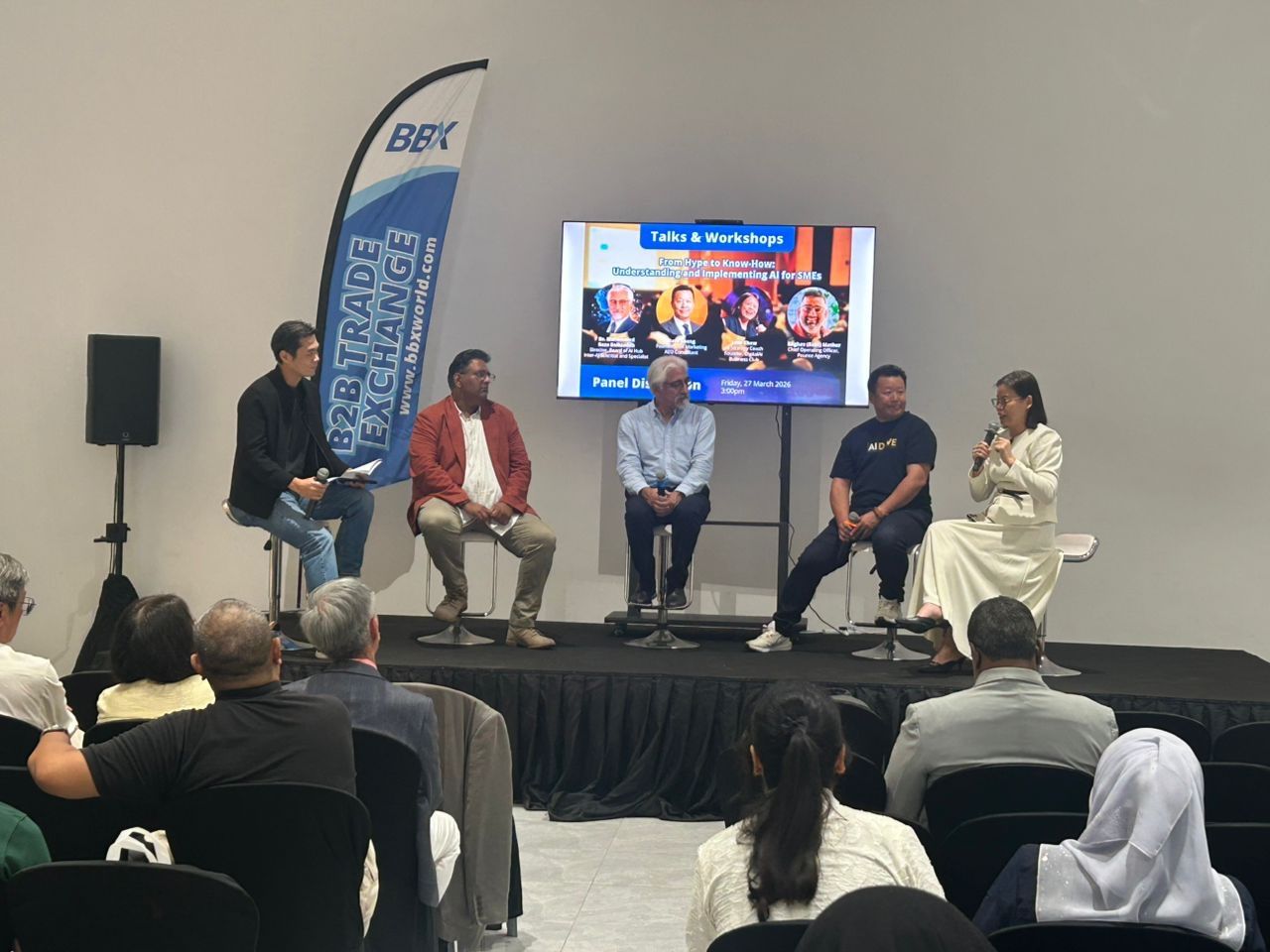
I was glad to participate as a panelist at BBX Connect Day 2.0 in a discussion centred on a timely theme: From Hype to Know-How: Understanding and Implementing AI for SMEs.
What made the session meaningful was that the conversation did not stay at the level of surface excitement. It moved beyond tool curiosity and brought together different perspectives on AI adoption, digital transformation, business growth, and operational reality. That matters, especially for SME owners and leaders who are under pressure to “do something with AI” without always having the time, structure, or confidence to do it well.
Too often, AI conversations become tool-led. People ask which platform to buy, which chatbot to install, or which automation to build first. But those questions are often too early. Before a business invests in any AI solution, it needs to understand what is worth improving, what should remain human-led, and what outcome the business is truly trying to achieve.
My Core Message as a Panelist
Strategy first before tools.
That was my core message during the panel. Many businesses think the first step in AI adoption is finding the “right” AI tool. In reality, the first step is gaining clarity.
Leaders need to ask better questions before they automate:
- What problem are we really solving?
- Where is the business losing time, consistency, or revenue?
- Which workflow creates the biggest operational friction today?
- Which decisions still require strong human judgment?
- What would a useful first win actually look like?
When businesses skip this thinking stage, they often automate the wrong process, create new confusion, or overload teams with tools they are not ready to use. AI can accelerate work, but it cannot fix unclear priorities, weak workflows, or poor decision-making discipline.
In other words, automating a messy process only creates faster confusion.
Where SMEs Should Start with AI
For SMEs, successful AI implementation is rarely about doing everything at once. It starts with identifying the right business bottlenecks and choosing practical use cases that solve real operational or commercial problems.
A simple starting framework looks like this:
1. Identify the business bottleneck
Look for friction points that repeat frequently. These may include slow response times, inconsistent follow-up, poor documentation, scattered knowledge, delayed reporting, or content creation bottlenecks.
2. Choose one workflow, not ten
Do not try to transform the whole business in one phase. Start with one workflow that is high-friction, repetitive, and important enough to matter. Early success builds confidence and internal momentum.
3. Clarify the role of human judgment
AI should support thinking, not replace thinking. Business owners still need human oversight for decisions involving context, risk, customer empathy, priorities, and brand direction.
4. Build capability inside the business
SMEs should not depend entirely on external vendors or one internal “AI person.” Teams need basic AI literacy, better workflow awareness, and a shared understanding of where AI helps and where it does not.
5. Review outcomes, not just activity
The goal is not to say, “We are using AI.” The goal is to improve a business result. That could mean faster turnaround time, more consistent customer response, better reporting quality, stronger content output, or improved follow-up discipline.
High-Impact AI Use Cases for SMEs
During the discussion, I highlighted that the best AI use cases for SMEs often begin in practical, everyday workflows rather than dramatic reinvention. In many cases, businesses get the earliest value from improving work that is repetitive, time-consuming, and dependent on consistent execution.
Good places to start include:
- Customer response: drafting replies, handling common queries, improving response consistency
- Internal knowledge: organising SOPs, FAQs, product information, and training references
- Reporting: summarising recurring reports, extracting patterns, drafting insights
- Follow-up: creating sales follow-up drafts, proposal summaries, reminder sequences
- Content support: turning raw expertise into clearer articles, posts, summaries, and reusable business communication
These use cases matter because they improve execution quality without requiring the business to jump immediately into complex transformation projects. They also help teams understand how AI fits into real work instead of treating it like a novelty.
Common AI Mistakes SME Leaders Should Avoid
As AI becomes more accessible, it also becomes easier to misuse. On the ground, I often see leaders make a few predictable mistakes. These mistakes do not always come from resistance. In many cases, they come from moving too quickly without a clear implementation lens.
1. Starting with the tool instead of the business problem
This is the most common mistake. Businesses get excited by what a tool can do before understanding what the business actually needs.
2. Expecting AI to replace judgment
AI can generate options, summaries, and drafts. But it still requires human judgment to decide what matters, what fits the customer, what carries risk, and what should be acted on.
3. Automating poor workflows
If the process is already messy, inconsistent, or unclear, AI will not solve the core issue. It may simply help the business produce low-quality output faster.
4. Trying to do too much too early
SMEs do not need an enterprise-scale AI roadmap on day one. They need a practical sequence, a focused use case, and a team that understands why the initiative matters.
5. Ignoring readiness and governance
Leaders need to think about data quality, confidentiality, approval flows, brand consistency, and responsible use. AI adoption without guardrails can create unnecessary risk.
What Business Leaders Should Do Next
If you are an SME owner, leader, or decision-maker wondering how to move forward, here is the practical next step:
- Map one business bottleneck clearly.
- Choose one workflow where AI can improve speed or consistency.
- Define what must stay human-led.
- Test with a simple use case before scaling.
- Measure business value, not just usage.
This is how businesses move from AI curiosity to AI capability. Not by reacting to trends, but by making better strategic decisions.
The future of AI in business is not just about technology. It is about leadership, readiness, operating discipline, and the ability to make better decisions before scaling faster.
Stop reacting to AI as a trend. Start using it as a strategic advantage.
A Personal Reflection on BBX Connect Day 2.0
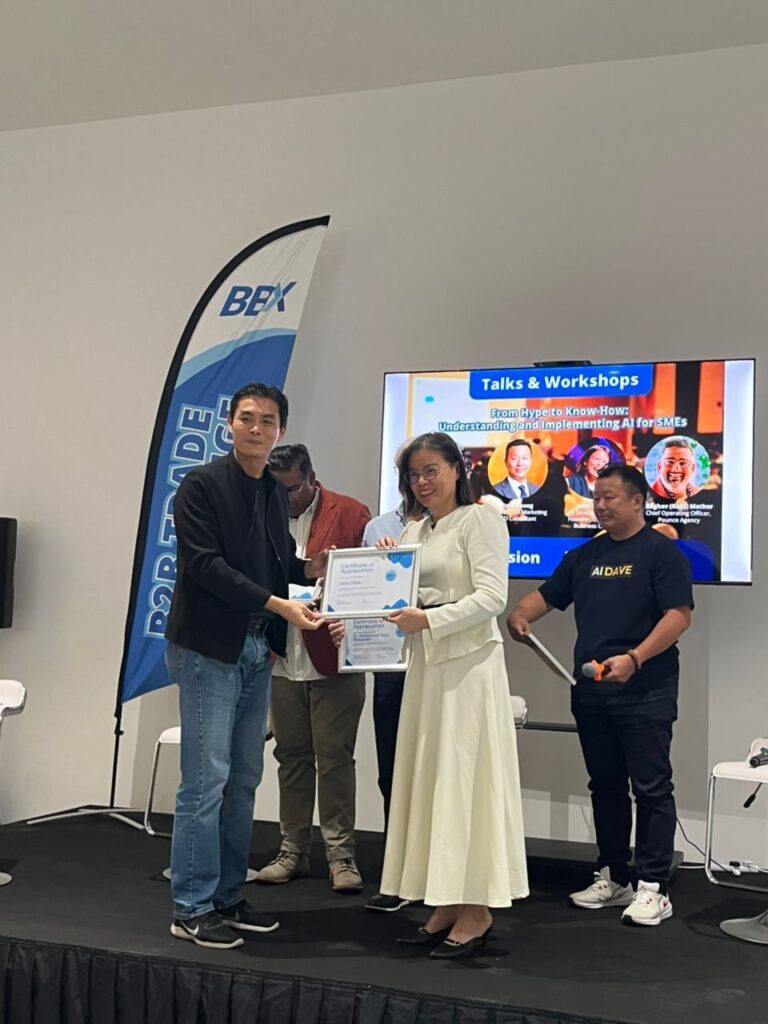
I appreciated the opportunity to share the stage with fellow panelists Dr. Mohammed Reza Beikzadeh, Dave Leong, and Raghav (Rakz) Mathur, together with moderator Wei Chee Lee. The strength of the conversation came from the diversity of perspectives across AI, strategy, marketing, and technology.
Thank you to the organisers, moderator, fellow panelists, and everyone who joined the session. These conversations matter because SMEs do not need more noise. They need clearer thinking, stronger decision-making, and a more practical path forward.
As always, I remain committed to helping business owners, leaders, and professionals translate AI into practical strategy, stronger systems, and sustainable growth.
FAQ
What is the first step for an SME that wants to use AI?
The first step is not choosing a tool. It is identifying the business problem, bottleneck, or workflow that needs improvement. AI works best when it is tied to a clear business outcome.
What are the best AI use cases for SMEs?
Strong starting points include customer response, internal knowledge support, repetitive reporting, sales follow-up, and content drafting. These are areas where consistency and speed matter, and where AI can support existing work quickly.
Can AI replace human judgment in business?
No. AI can support analysis, summarisation, drafting, and pattern recognition, but leadership judgment is still essential for decisions involving risk, customer understanding, priorities, and brand direction.
Why do some businesses fail to get results from AI?
Many businesses start with tools instead of strategy. Others try to automate unclear workflows, implement too much too early, or fail to build internal capability and governance.
How should SMEs approach AI adoption with confidence?
Start small, stay practical, choose a high-impact workflow, define the role of human oversight, and measure whether AI is improving a real business result. Confidence comes from structured implementation, not from hype.