
Customer Lifetime Value: Why Smart Businesses Stop Chasing More Leads and Start Building More Valuable Customers
Many businesses say they want growth. What they really build is activity — more leads, more campaigns, more noise, more discounting. But if the customer does not stay, buy again, upgrade, or refer, growth leaks out faster than it comes in.
Customer Lifetime Value, or CLV, shifts the conversation from “How do we get more customers?” to a much more strategic question: How do we design a business where each customer becomes more profitable over time?
This is why CLV matters so much. It forces you to stop measuring success only at the point of sale. A customer is not just a transaction. A customer is a stream of future revenue, future renewal, future expansion, and in many cases, future referral.
In other words, CLV is not just a finance metric. It is a business model lens. It tells you whether your offer, customer experience, and growth system are compounding — or quietly breaking.
What CLV really means
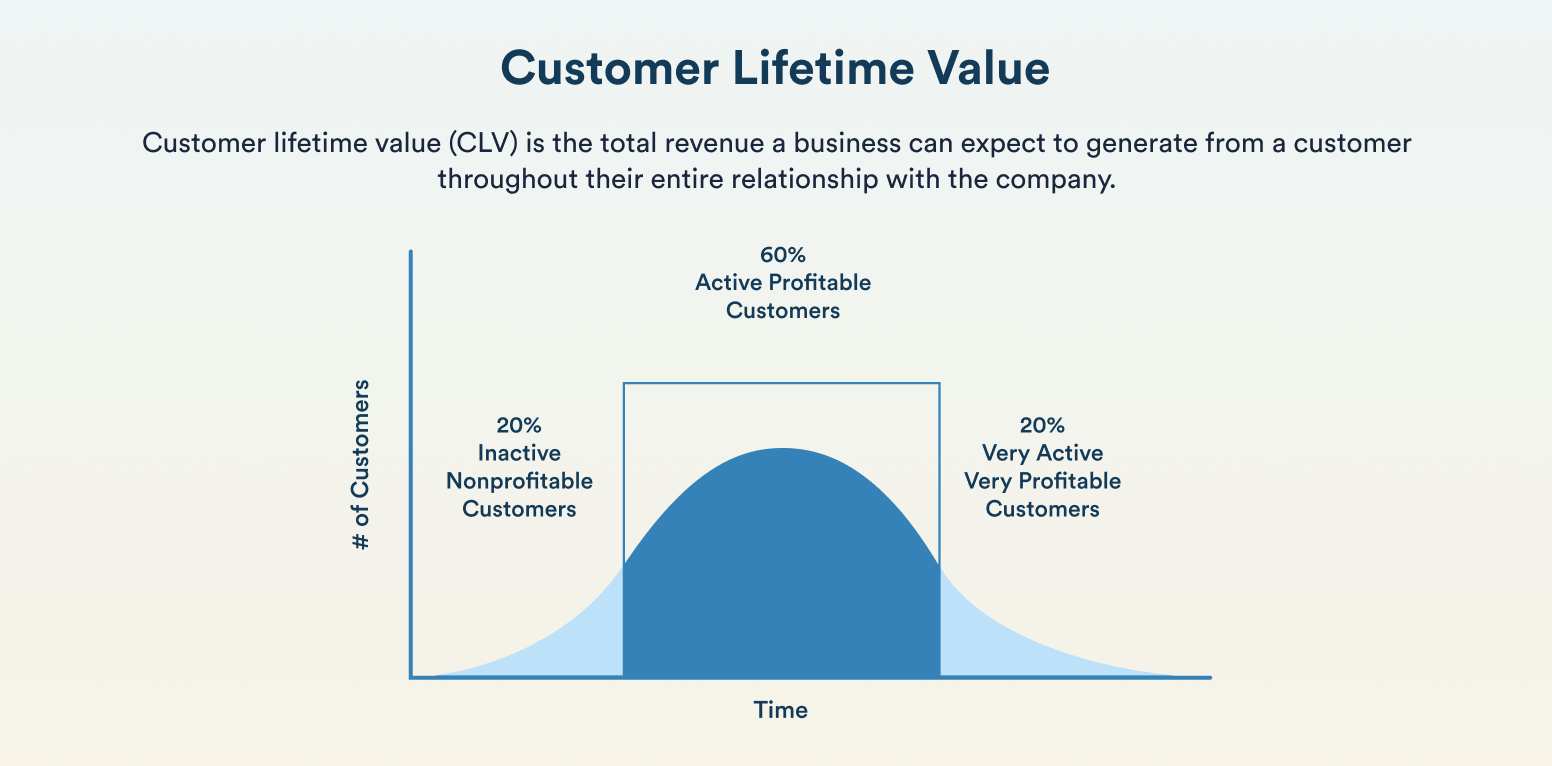
CLV is the total value a customer generates across the full relationship with your business, not just from the first purchase. That makes it one of the most useful metrics for leaders who want to make better decisions around pricing, retention, customer service, onboarding, marketing spend, and product design.
If you are in a service or retail business
CLV helps you see whether customers come back, buy more often, and spend more over time.
If you are in SaaS, membership, or subscriptions
CLV becomes even more powerful because churn, expansion revenue, renewals, and customer success have a direct effect on long-term value.
The shift is subtle but important. A short-term sales mindset asks, “Did we close the deal?” A CLV mindset asks, “Did we start a valuable relationship?”
How business model and revenue type affect CLV
CLV should never be read in isolation. The number only becomes useful when you look at it through the lens of your business model and how revenue actually comes in.
A one-time purchase business, a subscription business, and a service-led business may all have the same monthly sales figure — but their long-term customer value behaves very differently.
| Business model type | Main revenue pattern | What drives CLV most | What to watch carefully |
|---|---|---|---|
| One-time product / retail / ecommerce | Single purchases, repeat purchases, bundles | Purchase frequency, average order value, reorder rate | Low repeat buying, discount dependency, weak post-purchase follow-up |
| Subscription / membership / SaaS | Monthly or annual recurring revenue | Retention, churn reduction, renewal, expansion revenue | Early churn, weak onboarding, low product adoption, poor renewal experience |
| Service business | Project fees, retainers, advisory hours | Client retention, account growth, recurring engagements, cross-sell | Revenue gaps between projects, no continuity offer, poor upsell structure |
| Coaching / consulting / training | Programs, workshops, retainers, follow-on offers | Ascension path, trust, transformation results, next-offer conversion | Only selling entry programs, no premium pathway, no alumni or continuity model |
| Marketplace / platform | Transaction fees, commissions, subscriptions, add-ons | User retention, platform usage frequency, seller-buyer stickiness | Low engagement, weak activation, poor repeat transactions |
| Hybrid model | Mix of one-time, recurring, service, and upsell revenue | Customer journey design across multiple offers | Disconnected offers, unclear upgrade path, fragmented data |
Why this matters
If your revenue depends mainly on one-off sales, CLV improvement usually comes from increasing repeat purchase, bundle value, and reactivation. If your revenue depends on recurring payments, CLV rises when customers stay longer, adopt faster, and upgrade more often.
For service firms, CLV often grows through relationship depth — moving from one project into retainer, then into advisory, strategic support, or implementation. In other words, the real opportunity is often not just getting the client, but designing the next logical revenue layer after the first engagement.
The two practical ways to calculate CLV
1. The simple business formula
For many SMEs, the simplest CLV formula is already enough to expose weak points in the customer journey:
This is useful when you want a clear first benchmark. It helps you ask:
- Are customers spending enough each time?
- Are they returning often enough?
- Are they staying with us long enough to become profitable?
2. The SaaS / subscription lens
If you run a membership, software, recurring service, or subscription model, you may want to think in terms of recurring revenue, margin, and churn:
This version is helpful because it reflects the real economics of recurring businesses. It reminds you that customer value is not just about revenue coming in. It is also about margin protected and churn reduced.
Why CLV matters more than most businesses realize
Many founders and managers still over-focus on lead generation because leads feel visible. They are easier to count, easier to celebrate, and easier to show in a meeting. But CLV reveals something more important: whether your growth is actually sustainable.
| Area | Without a CLV lens | With a CLV lens |
|---|---|---|
| Marketing | You chase cheap leads or short-term campaigns. | You invest in channels and messages that bring better-fit customers who stay longer. |
| Sales | You celebrate every close equally. | You distinguish between customers who buy once and customers who become high-value accounts. |
| Onboarding | You treat onboarding as admin. | You see onboarding as the first profit-protection stage. |
| Customer Service | You see support as a cost center. | You see support as a retention and expansion lever. |
| Offer Design | You sell one-off products. | You build tiers, add-ons, renewals, and next-step offers that increase value over time. |
This is the deeper message: CLV does not simply measure customer value. It exposes whether your business is designed for repeatability, loyalty, and compounding revenue.
The five levers that usually move CLV fastest
1. Retention
If customers stay longer, value rises. This sounds obvious, but many teams still behave as if retention is someone else’s problem. It is not. Retention is where strategy becomes economics.
2. Onboarding
If customers fail to experience value early, churn becomes almost predictable. A stronger onboarding journey reduces drop-off and increases the chance of longer-term engagement.
3. Purchase frequency
The more often customers come back, the more value accumulates. This is why reminders, replenishment offers, recurring plans, communities, and follow-up sequences matter.
4. Average order value or expansion revenue
Cross-sell, upsell, bundles, premium tiers, add-ons, and advisory services all increase customer value — but only when they are genuinely relevant to the customer’s next problem.
5. Personalization and customer success
Businesses that tailor experience, guidance, and offers based on behavior usually create stronger stickiness. In SaaS especially, customer success is not support after the sale. It is a direct driver of retention, renewal, and expansion.
Where many SMEs misread CLV
The danger with CLV is not that it is too complicated. The danger is that people use it too casually.
- Mistake 1: Treating all customers as equal. They are not. Some customers are profitable, some are costly, and some never become a fit.
- Mistake 2: Looking only at revenue, not margin. A “high-value” customer with poor margin may be less attractive than they appear.
- Mistake 3: Using average CLV and ignoring segments. Your best customer type may behave very differently from your average customer.
- Mistake 4: Focusing on acquisition while neglecting onboarding and service. That is like pouring water into a leaking bucket.
- Mistake 5: Seeing CLV as a reporting metric instead of a decision metric. The point is not to admire the number. The point is to redesign the system behind the number.
A more strategic way to use CLV in your business
Instead of asking, “What is our CLV?” ask these five better questions:
- Which customer segment has the highest long-term value?
Not just the easiest to acquire — the most valuable to retain and grow. - Where in the journey do we lose value?
Lead quality, onboarding, inactive customers, poor follow-up, no next offer, weak renewal? - What early behaviors predict a high-value customer?
Fast onboarding, repeat usage, higher engagement, buying add-ons, attending training? - What part of our current offer limits expansion?
No tiers, no membership, no bundles, no continuity plan, no upgrade path? - What should AI help us improve first?
Segmentation, churn risk signals, personalization, reactivation, customer success follow-up, or next-best-offer triggers?
How AI can support CLV without becoming hype
AI does not magically increase customer lifetime value. What it can do is help you notice patterns earlier, act faster, and personalize better.
| Business need | How AI helps | Business outcome |
|---|---|---|
| Identify high-value segments | Analyze transaction, behavior, and engagement data to group similar customers | Better targeting and smarter resource allocation |
| Reduce churn | Flag customers showing inactivity, low usage, or drop-off patterns | Earlier retention intervention |
| Improve onboarding | Trigger guided messages, reminders, FAQs, or success milestones | Faster time to value |
| Increase repeat purchase | Send relevant recommendations, reorder prompts, or reactivation sequences | Higher frequency and stronger retention |
| Grow account value | Suggest relevant upgrades, bundles, or next offers based on usage and intent | Higher average revenue per customer |
The key is to use AI in service of a clear business objective. Not “Where can we use AI?” but “Where are we losing customer value, and how can AI help us fix that faster?”
A practical 30-day CLV improvement sprint
If you want to turn CLV from theory into action, start here:
- Estimate your current CLV.
Do not wait for perfect data. Use the best available view. - Break it down by segment.
Compare new vs returning, product A vs product B, small vs premium accounts, referral vs paid leads. - Map your customer journey.
Find the points where customers stall, disappear, downgrade, or never buy again. - Choose one lever only.
Retention, onboarding, repeat purchase, upsell, or churn reduction. - Design one intervention.
Examples: welcome flow, reactivation campaign, renewal reminder, onboarding checklist, add-on offer. - Track the before-and-after numbers.
Measure repeat purchase, reactivation, renewal, account expansion, or drop in churn.
Member prompt: diagnose where your CLV is leaking
Use this prompt with ChatGPT, Claude, Gemini, or your internal AI assistant after you gather your customer data.
Final thought
Customer Lifetime Value is not only about getting customers to spend more. It is about becoming the kind of business customers want to stay with.
When leaders start measuring customer relationships over time, they begin to make better decisions about service, pricing, experience, retention, and growth. That is when the business stops depending only on the next campaign — and starts building compounding value.
That is the real power of CLV.